Hello Silver & Gold stackers! Continuing our exploration of vintage Japanese banknotes, today we’ll dive into the ¥1 note from 1946, featuring the esteemed Ninomiya Sontoku.
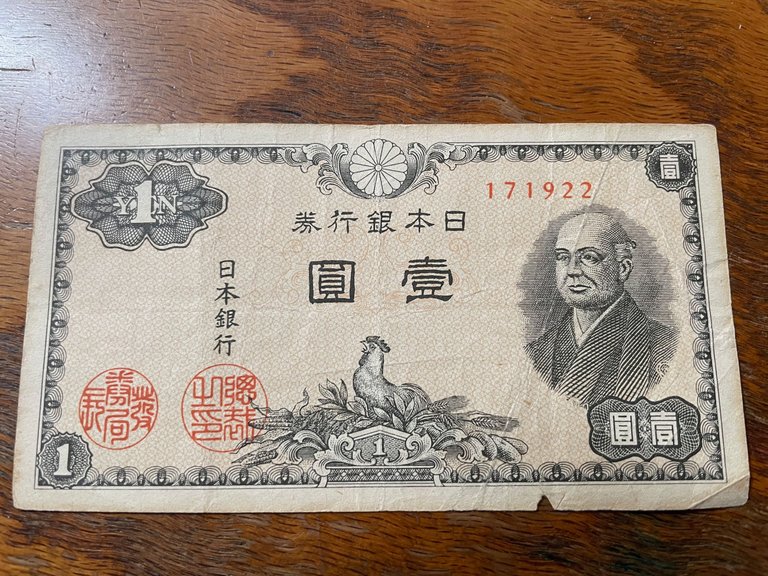
If you read my post about the 1943 ¥1 note, you'll remember that in 1943, ¥1 would have been around 32 US cents, which adjusted for inflation would be around $5.80 in 2024 money. By 1946, when this new ¥1 note was released, things had slipped even further. There was no official exchange rate at this time, but basically things were in free-fall. They wouldn't stabilize until 1949 when the exchange rate was pegged at ¥360 to $1.
Depressing, eh? Not half as depressing as I'm sure it was to the Japanese people trying to survive at the time. Anyway, let's look at the note.
Front
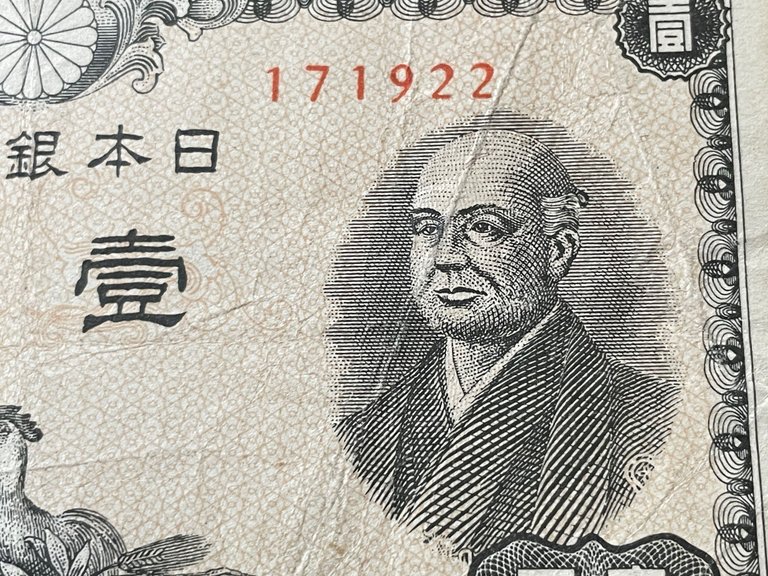
As mentioned above, this figure is Ninomiya Sontoku, a prominent 19th-century philosopher and agricultural leader, renowned for his principles of industry and frugality—virtues highly valued in post-war Japan. His image on the banknote is symbolic, meant to inspire a sense of thrift and diligence among the populace.
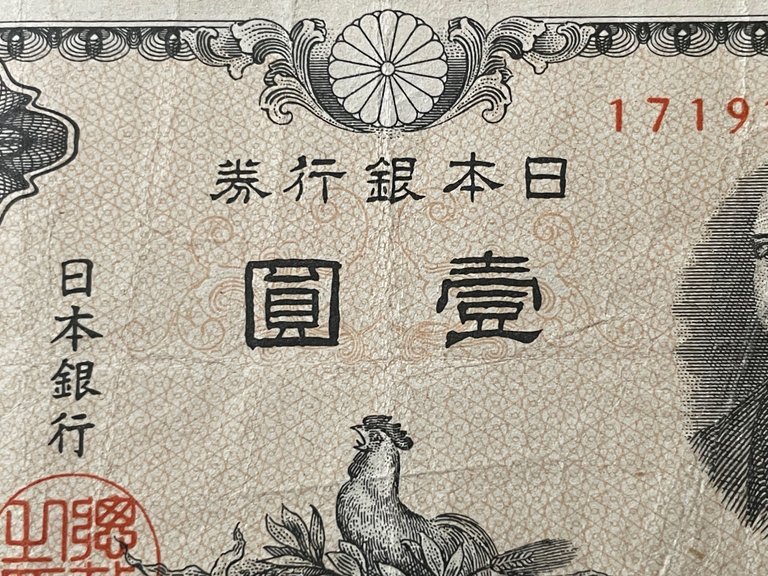
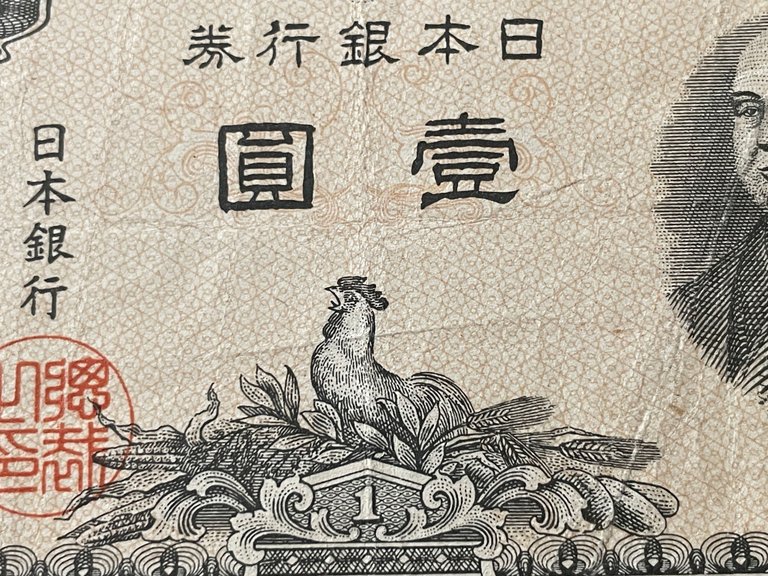
Besides him, we have a rooster in a heap of maize and wheat at lower center, and some nice random designs.
All the text is much simpler than on the previous ¥1 we saw.
- 日本銀行券 (Nippon Ginkōken), "Bank of Japan note"
- 壹圓 (ichi en), "one yen"
- 日本銀行 (Nippon Ginkō), "Bank of Japan".
All of the horizontal text is backwards to our eye because, at the time, Japanese was written right to left.
Back Side
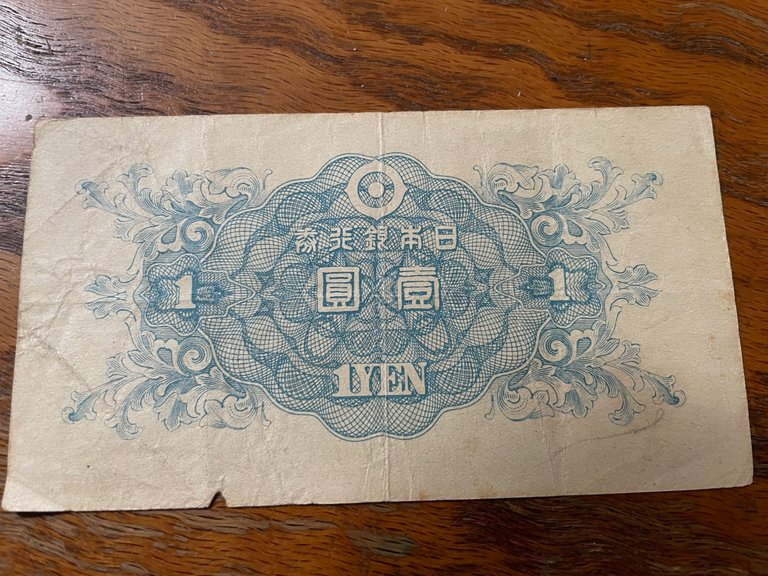
This one is even simpler still. GHQ (the occupying Americans) would only approve this basic design. The text reads:
- 日本銀行券, "Bank of Japan note"
- 壹圓 (ichi en), "one yen"
About
Ninomiya Sontoku was an interesting guy and he is still honored today. He was an orphan but he worked his way up and became a powerful figure in the country, eventually being entrusted with one of the shogunate's estates. After his death, even the emperor honored him. Many schools feature a statue of him in or in front of the school, often showing him reading a book while walking and carrying firewood. The basic idea is that he was reading and studying every single moment possible, an image that schools can only wish all their students would follow.
Besides him, it's kind of a blah note. Ok design, but nothing special. The notes were more or less replaced just two years later in 1948 when brass ¥1 coins were released. It was still legal tender, but few people used it, as people at the time evidently preferred coins. Finally it was discontinued in 1956 with the introduction of the alumin(i)um ¥1 coin.
Unlike the 1943 ¥1 note, some of these have collector's value depending on the serial numbers and can go for quite a lot of money. I don't think this one does, unfortunately. I'm not knowledgeable enough to know, honestly, but I doubt the coin shop would have sold it to me for ¥300 if it was worth something.
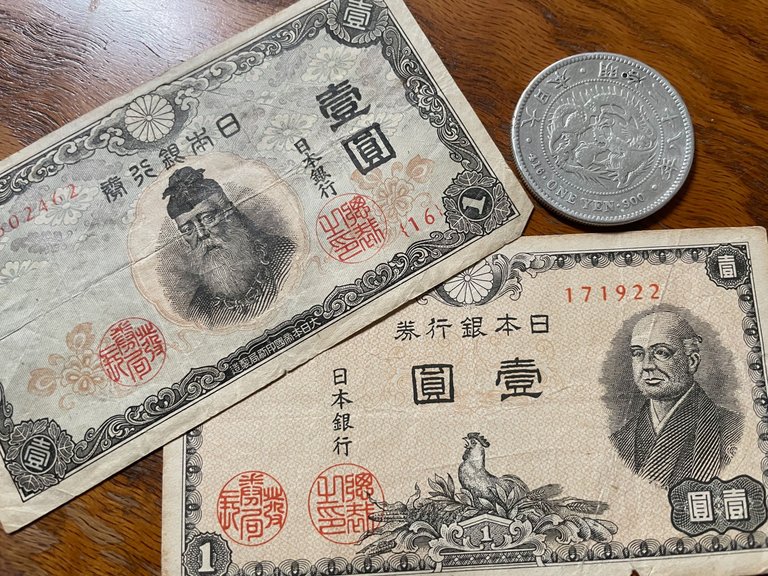
Anyway, here is my current ¥1 family! A silver coin and two banknotes!
❦
 |
David LaSpina is an American photographer and translator lost in Japan, trying to capture the beauty of this country one photo at a time and searching for the perfect haiku. He blogs here and at laspina.org. Write him on Twitter or Mastodon. |


