English version
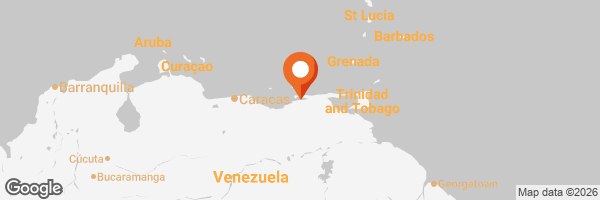
Visiting the sea is usually a pleasant experience if you go with your senses open to discovering just how wonderful nature is. Standing at one end of Tocuchare Beach in Sucre State, I get a very unique perspective; it seems as if I’m standing before a lagoon, since the sea, like a mirror, reflects the greenery of the mountains, creating this optical illusion.


But as I move toward the middle of the shore, the entire view turns blue; obviously, the sea itself now reflects the sky before me, and the horizon unfolds as a landscape worthy of a work of art. The framing, in this case, allows me to appreciate the same element in two different ways at the same moment.


Furthermore, Tocuchare also features three types of shorelines: one made of sand, another of natural stones, and a third consisting of debris. The first two are typically the most common on beaches in this area, while the third formed after the sea broke a pier that had been built to serve as a terrace for tourists.


The power of the sea can be so destructive that a structure made of iron and concrete is quickly transformed into an artificial reef. Large pieces of rubble remain as reminders of a tourism project that failed to account for the impact of the waves, as well as the seismic activity characteristic of the El Pilar fault, which extends from the Gulf of Paria to the Cariaco Trench.


The sea both destroys and builds an ecosystem from these debris; these artificial stones—made of sand, gravel, cement, and water—have become a refuge for crabs and other mollusks, as well as microorganisms such as polyps, thus giving rise to a coral structure that will transform into a reef in a few years.
Versión en Español
Visitar el mar suele ser una grata experiencia si se acude con los sentidos dispuestos a descubrir lo maravillosa que es la naturaleza. Situado en un extremo de la playa Tocuchare en el estado Sucre, obtengo una perspectiva muy particular, parezco estar ante una laguna ya que el mar, cual espejo, refleja el verdor de la montaña, concediendo tal ilusión óptica.
Pero al desplazarme al medio de la orilla, toda la visión se torna azul, obviamente el mismo mar ahora refleja ante mí el cielo y el horizonte se presenta con un paisaje digno de una obra artística. La focalización, en este caso, permite apreciar de dos formas distintas un mismo elemento en un mismo instante.
Por otra parte, Tocuchare también presenta tres tipos de orillas, una de arena, otra de piedras naturales y una tercera que es de escombros. Las dos primeras suelen ser las más comunes en las playas de este sector, en tanto la última opción se formó luego de que el mar rompiera un muelle construido con la finalidad de ser una terraza para turistas.
El poder del mar puede llegar a ser tan destructivo que una estructura de hierro y concreto queda convertida en un coral artificial en poco tiempo. Grandes pedazos de escombros permanecen como recuerdos de un proyecto turístico que no consideró el impacto del oleaje así como también de los movimientos telúricos propios de la falla de El Pilar, que se extiende por el Golfo de Paria hasta la fosa de Cariaco.
El mar destruye y también construye un ecosistema a partir de estos restos de materiales, estas piedras artificiales hechas con arena, granza, cemento y agua han pasado a ser refugio de cangrejos y de otros moluscos, además de microorganismos como los pólipos, originando de esta forma una estructura coralina que en unos cuantos años se transformará en un arrecife.
✓Photos from my personal gallery, edited with Fotocollage.
✓Text translated with DeepL.
✓Fotos de mi galería personal, editadas con Fotocollage.
✓Texto traducido con DeepL.