Hola, mis amigos virtuales de Hive. Lindo día para todos. Con gran placer me estreno en esta comunidad con la esperanza de que disfruten mis textos.
Hay muchas cosa que he idio descubriendo, aprendiendo e incorporado a mis rutinas acá en México, en mi nueva vida. Pero hoy quiero hablarle sobre un juego muy particular. Se juega con cartas, que en Cuba son llamadas barajas.
Hello, my virtual friends on Hive. A lovely day to everyone. With great pleasure, I’m making my debut in this community, hoping you’ll enjoy my writing.
There are many things I’ve been discovering, learning, and incorporating into my routines here in Mexico, in my new life. But today, I want to tell you about a very particular game. It’s played with cards—what in Cuba we call barajas.

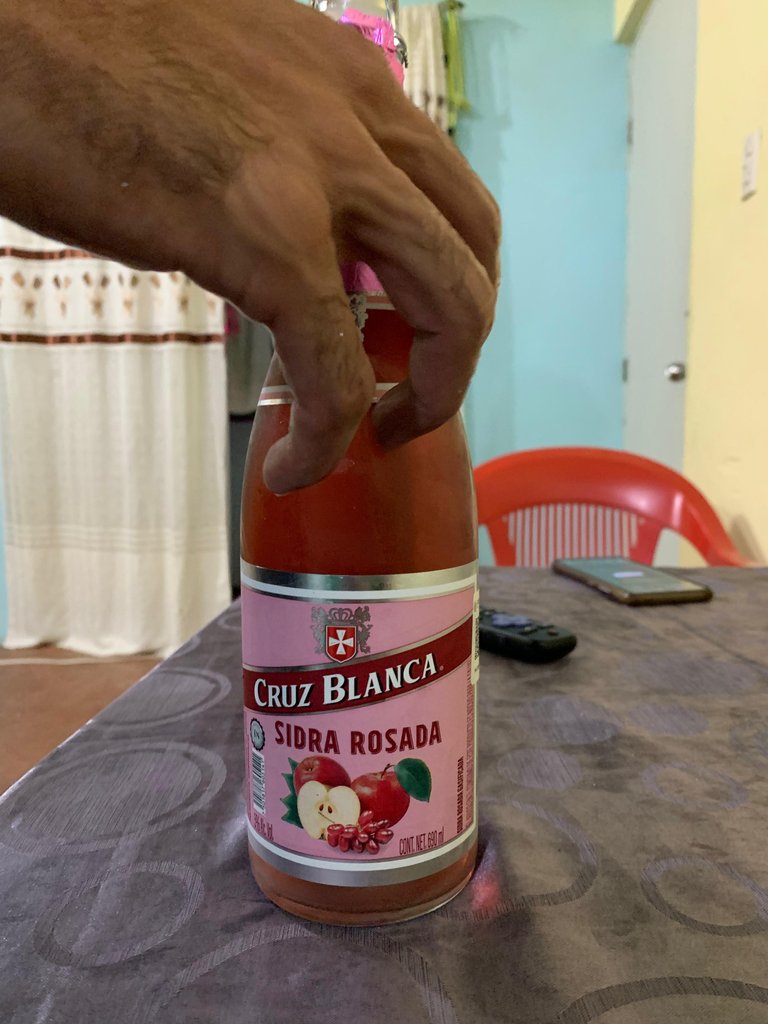
En las noches, luego de la cena, en muchas ocasiones para entretenernos y divimertirnos, mi novio, mi suegro y yo, nos ponemos a jugar Macao. Mi suegro fue quien nos enseñó porque ya el llevaba un tiempo en México. Y anoche fue una de esas noches de juego, aunque esta vez hubo un toque especial y distintivo. Mi suegro compró una botella de Sidra, un tipo de Sidra que nunca había probado. Es de color rosado y su nombre es Cruz Blanca. Su sabor es suave y ligero en la garganta, una excelente compañía para amenizar el partidos.
In the evenings, after dinner, to entertain and amuse ourselves, my boyfriend, my father-in-law, and I often play Macao. My father-in-law taught us because he’s been in Mexico for a while now. And last night was one of those game nights, though this time with a special and distinctive touch. My father-in-law bought a bottle of cider, a type I’d never tried before. It’s pink and called Cruz Blanca. Its flavor is smooth and light on the throat, an excellent companion to liven up the game.


Los mexicanos juegan Macao en cualquier parte, entre risas y con un mazo de cartas españolas, se divierten. Lo hacen con una intensidad y una jerga popular que enseguida me sonaron familiares. “Macao,” dicen y me parece que están llamando a un animal. Pero en mi mente resonaba un recuerdo no muy lejano. Nunca vi ese juego en La Habana, al menos no en las mesas de mi familia ni amigos. Sin embargo, había algo en la cadencia de las apuestas, en el gesto de golpear la carta contra la mesa, que me recordaba los patios traseros y la algarabía, las sillas de plástico y las noches sin prisa a la luz de la luna.
Mexicans play Macao everywhere—amid laughter and with a deck of Spanish cards, they have fun. They play with an intensity and a popular slang that immediately sounded familiar to me. “Macao,” they say, and it almost sounds like they’re calling an animal. But in my mind, a not-so-distant memory echoed. I never saw this game in Havana, at least not at the tables of my family or friends. Yet, there was something in the rhythm of the bets, in the gesture of slapping a card on the table, that reminded me of backyards and chatter, plastic chairs and unhurried nights under the moonlight.


Cuando mi suegro me invitó a jugar por primera vez, al tomar las cartas en mis manos, mi memoria empezó a fluir. No era el juego en sí, sino el ritmo del juego. La forma de contar, la estrategia de guardar los ases, la risotada cuando alguien se “quemaba” por no decir “macao” al quedarse con una sola carta. Según supe por unos vecinos mexicanos, la teoría más firme sobre su origen es que este juego llegó a los puertos del Golfo de México, como Veracruz, a través de marineros españoles o caribeños hace décadas, quizás siglos. Es un juego de naipes simple pero que crea adicción, que cruzó el Atlántico y se quedo en mexicano.
When my father-in-law invited me to play for the first time, as I took the cards in my hands, my memory began to flow. It wasn’t the game itself, but the rhythm of the game. The way of counting, the strategy of holding onto aces, the burst of laughter when someone got “burned” for not saying “macao” when they were left with just one card. According to some Mexican neighbors I spoke with, the strongest theory about its origin is that this game arrived at Gulf of Mexico ports, like Veracruz, through Spanish or Caribbean sailors decades ago, perhaps centuries ago. It’s a simple but addictive card game that crossed the Atlantic and settled in Mexico.


Este juego consiste en que la A es pasar al jugador que va después de ti, el 7 es para echarle 2 cartas a que sigue, con el 3 se para la jugada de un partipante, la K echa 5 cartas o sea que tienen que robar 5 cartas del banco, la J es para cambiar de figurita y gana el primero que ponga todas sus cartas. Bueno, algo así, no se explicarlo de otra manera, al menos todavía. Con este juego, me dio cuenta de cómo la cultura viaja sin pasaporte, porque lo hace en los bolsillos de la gente, en los barcos, en las ganas de conectar con otras tierras.
This game works like this: the Ace makes the next player skip their turn, the 7 forces the next player to draw two cards, the 3 stops a participant’s turn, the King forces the next player to draw five cards, the Jack changes the suit, and the first player to get rid of all their cards wins. Well, something like that—I can’t explain it any other way, at least not yet. With this game, I realized how culture travels without a passport, because it travels in people’s pockets, on ships, in the desire to connect with other lands.


Cuando juego al Macao presto mucha atención, estoy aprendiendo sus frases, la forma particular de hacer trampa inofensivas, “de buen humor”. Sin decirlo, siento que me acerco a Cuba. No es un juego “cubano”, literalmente hablando. Es un juego del mar, de los puertos, de la gente que comparte horas bajo un mismo sol o una misma luna. En cada ronda, entre el “¡Paso!” y el “¡Quemo!”, me acerco a México y al mismo tiempo, me siento menos lejos de La Habana, si, ya sé que parece una contradicción. Quiero creer que a veces, para encontrar un pedazo de casa, hay que sentarse a la mesa en el lugar más inesperado y simplemente decir: “Repártame. Le entro al Macao”.
When I play Macao, I pay close attention. I’m learning its phrases, the particular way of cheating harmlessly, “in good humor.” Without saying it, I feel closer to Cuba. It’s not a “Cuban” game, literally speaking. It’s a game of the sea, of ports, of people who share hours under the same sun or the same moon. In every round, between “¡Paso!” and “¡Quemo!”, I feel closer to Mexico and, at the same time, less distant from Havana. Yes, I know it seems like a contradiction. I want to believe that sometimes, to find a piece of home, you have to sit at the table in the most unexpected place and simply say: “Deal me in. I’m joining the Macao game.”


Texto e imagenes de mi propiedad.
Muchas gracias por visitar mi post.
Text and images of my property. Thank you very much for visiting my post.