
Greetings, friends.
In Belarus, the memory of the Great Patriotic War is a fundamental part of the national identity, state ideology and personal memory of the majority of citizens.
The Belarusian Soviet Socialist Republic took one of the heaviest blows. According to various sources, the war claimed the life of one in three residents of the republic. This tragedy has left a deep mark on every Belarusian family, making the memory of the war sacred.
Belarus is the most important partisan republic. Hundreds of thousands of partisans operated on its territory during the occupation, which pulled significant Wehrmacht forces from the Eastern Front to the internal partisan front.

There are many monuments dedicated to the period of the Great Patriotic War on the territory of Belarus. The Brest Fortress, which is located on the border with Poland and fought the German Wehrmacht on June 22, 1941, and resisted in complete isolation and encirclement, has always been considered one of the most significant.
Since childhood, I have known about the village of Khatyn, which the punishers burned down along with the inhabitants, and there were many such villages on the territory of Belarus. There is also a very sad memorial there.
But I only found out about the Mound of Glory now, to my great shame.
The decision to erect the Kurgan of Glory memorial was made in 1966. According to the idea, it was supposed to mark the victorious end of the Belarusian offensive operation Bagration in 1944, which led to the destruction of the German Army Group Center. This Mound is the epitome of the military and economic might of the Soviet Union.


By the will of fate, I found myself this year in the jubilee year of the Great Victory. A place like this has its own special aura. Thoughts of the past, of joy and sorrow, are born in my head.

The so-called victory symbols and victory weapons are collected on the site in front of the mound. It is customary to apply the word "famous" to each such weapon - the famous Katyusha rocket launcher, the famous IL-2 attack aircraft, the famous T-34 tank, and even the diesel locomotive, which transported a lot of goods in wartime, is also famous.


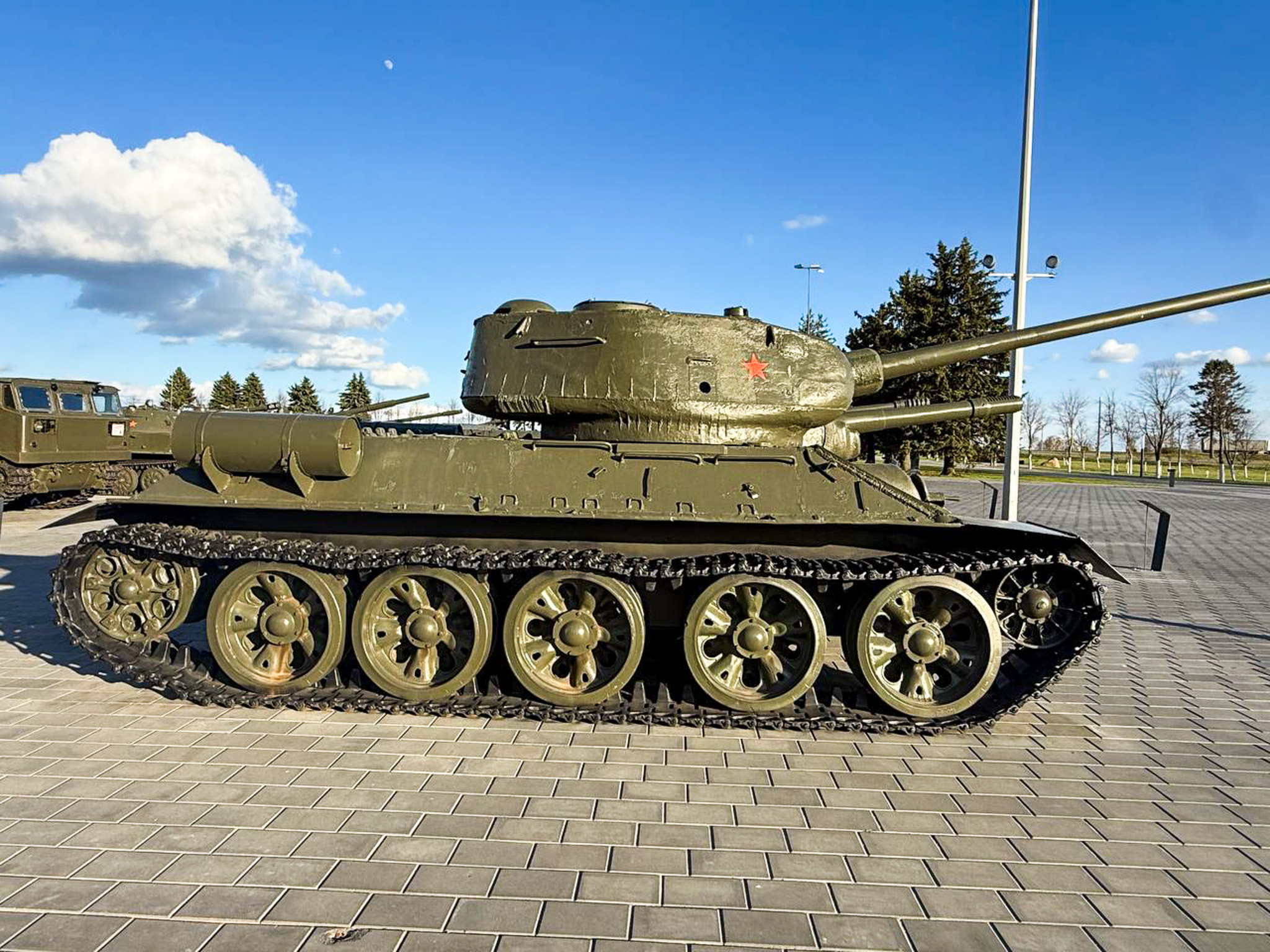

Time goes on, it doesn't stop, people, everyday life, life itself, the appearance of cities, communications are changing. There are generations who know about the World War only from the stories of people who did not live at that time, from films created by directors who did not know that war. And suddenly, somewhere, there is an exclamation: "we are the greatest, we are the strongest, we must be respected and feared.".. And once again, the sounds of saber rattling become audible, lazy old men begin to make speeches that excite young blood, which makes one lose one's mind and the story unfolds into another round of a major global war....
It seems to me that such Mounds of Glory do not remind of the horrors of war, but are carriers of the contagion of greatness, like military parades, especially with demonstrations of military equipment. Yes, it's beautiful, but it's scary.


The view from the top of the Mound is magnificent. It's the highest point on this plain.
I plan to visit Belarus in September to capture the beauty of the color palette of the local nature.

By the way, the location of the City can be seen by clicking on the link to the map in the comments to the article by @travelfeed and @worldmappin

With love @apnigrich



