If you prefer the English version, click on the following link 👉 HERE
Hay imágenes que no necesitan sonido para aturdir, je, je, je; pues, la fotografía que nos comparte @lanzjoseg es una de ellas. Al observarla, lo primero que me intriga no es la arquitectura ni la limpieza del lugar, sino la ausencia de humanos. Es una coreografía de líneas rectas y reflejos que desemboca en un vacío absoluto. Un tablero de ajedrez se extiende bajo nuestros pies en un patrón de baldosas blancas y marrones, pero en este juego, las piezas —nosotros, los transeúntes, los compradores, los ciudadanos— nos hemos retirado del tablero.
Crónica de un Pasillo en Silencio
La imagen nos sitúa en un centro comercial, de eso no hay duda, un espacio diseñado por definición para la efervescencia humana, el intercambio y el murmullo constante. Sin embargo, aquí el silencio tiene cuerpo. Se percibe en el brillo impecable del piso, que refleja las luces del techo como si fuera agua estancada en una cueva de concreto. A los lados, los locales comerciales, con sus vitrinas de vidrio y sus marcas internacionales como Tommy o Nike, se yerguen como monumentos a un consumo que parece haber quedado en suspenso.

Imagen prompt de la iniciativa, propiedad de @lanzjoseg.
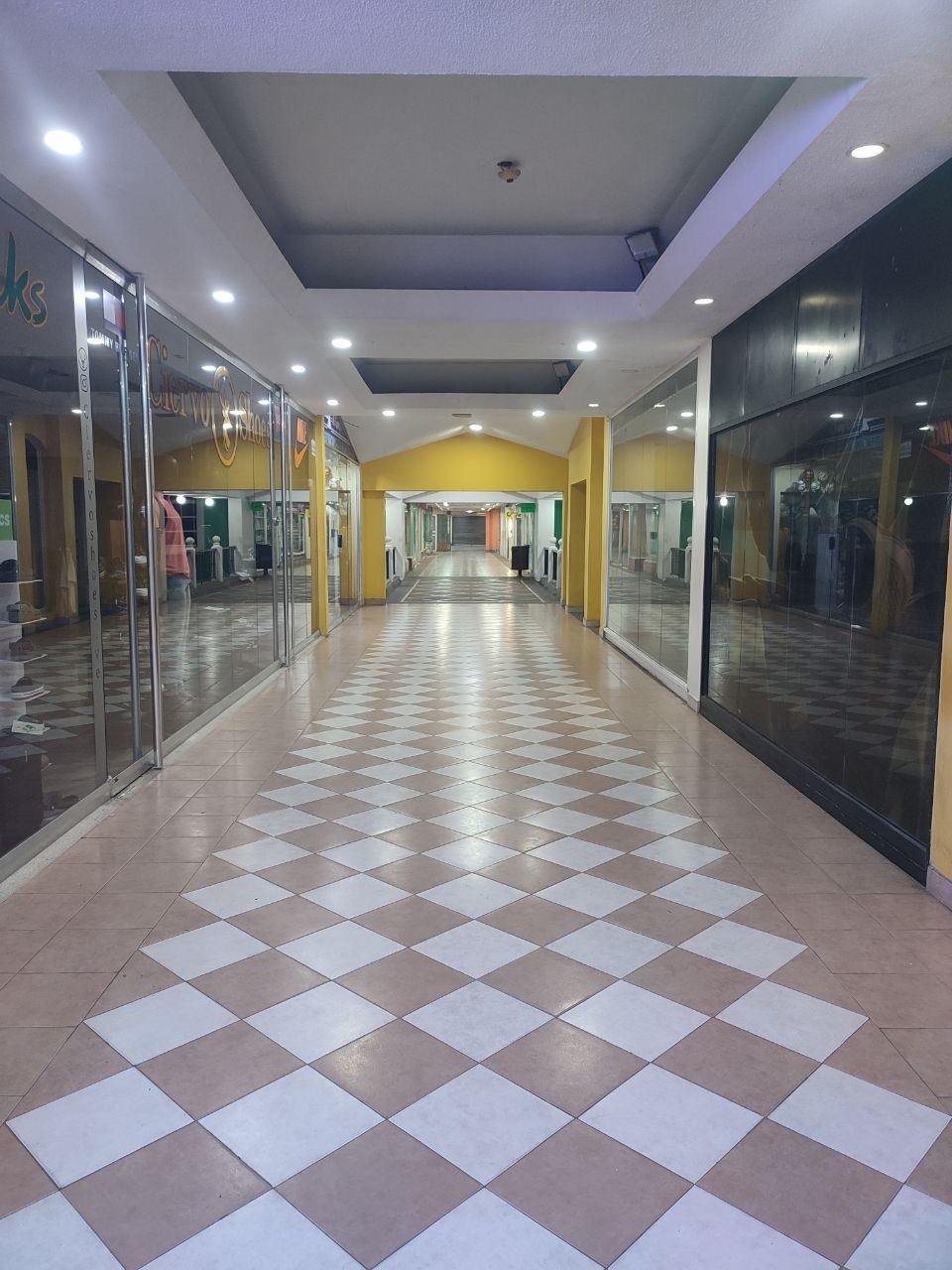
Esta "soledad", creo que no es accidental. En el contexto de la Venezuela actual, estos pasillos son el síntoma de una herida profunda. Puede que sea la hora del cierre, o quizás las horas previas a la apertura, pero el aura que desprende la fotografía sugiere algo más permanente... quizá la "economía del espejismo". En muchas ciudades de mi querida Venezuela, los centros comerciales se han convertido en estructuras liminales, lugares de tránsito entre un pasado de opulencia y un presente de supervivencia. El brillo de los pasillos contrasta con la sombra de las vidrieras, donde a menudo los precios espantan más que la propia oscuridad.
Desde mi punto de vista, la imagen es una metáfora visual de la resiliencia y el abandono. El pasillo está limpio, las luces están encendidas, la estructura permanece en pie; hay un esfuerzo humano por mantener la apariencia de normalidad. Pero la ausencia de personas revela la fractura del tejido social. Un centro comercial sin gente es un cuerpo sin alma.
Bienvenidos todos a esta, mi participación de la semana en el TopFiveFamily. Si es de tu agrado participar, aún estás a tiempo. Este es el enlace Observa⇾Piensa⇉Escribe. Recuerda cumplir las reglas…

Portada de la iniciativa.
Dedicado a todos aquellos escribas que contribuyen, día a día, a hacer de nuestro planeta, un mundo mejor


Some images don't need sound to stun, ha ha ha; well, the photograph shared by @lanzjoseg is one of them. Upon seeing it, the first thing that intrigues me isn't the architecture or the cleanliness of the place, but the absence of humans. It's a choreography of straight lines and reflections that culminates in absolute emptiness. A chessboard unfolds beneath our feet in a pattern of white and brown tiles, but in this game, the pieces —us, the passersby, the shoppers, the citizens— have withdrawn from the board.
Chronicle of a Silent Corridor
The image places us in a shopping mall, of that there is no doubt, a space designed by definition for human effervescence, exchange, and constant murmur. However, here, silence has a physical presence. It's perceived in the impeccable shine of the floor, which reflects the ceiling lights as if it were stagnant water in a concrete cave. On either side, the shops, with their glass storefronts and international brands like Tommy Hilfiger and Nike, stand like monuments to a consumerism that seems to have been put on hold.
Prompt image of the initiative, property of @lanzjoseg.
This "solitude," I believe, is not accidental. In the context of present-day Venezuela, these corridors are symptomatic of a deep wound. It may be closing time, or perhaps the hours before opening, but the aura emanating from the photograph suggests something more permanent... perhaps the "economy of illusion." In many cities of my beloved Venezuela, shopping malls have become liminal structures, places of transit between a past of opulence and a present of survival. The brightness of the corridors contrasts with the shadow of the storefronts, where often the prices are more frightening than the darkness itself.
From my perspective, the image is a visual metaphor for resilience and abandonment. The corridor is clean, the lights are on, the structure remains standing; there is a human effort to maintain the appearance of normalcy. But the absence of people reveals the fracture in the social fabric. A shopping mall without people is a body without a soul.
Welcome everyone to my entry for this week's TopFiveFamily. If you'd like to participate, there's still time. Here's the link: Observe⇾Think⇉Write. Remember to follow the rules…
Cover of the initiative.
Dedicated to all those writers who contribute, day after day, to making our planet a better world.
